

FAQS About EKG
At Northeast Primary Care in Mineola and Melville, NY, we provide essential information to help you understand EKG tests, their purpose, and what to expect during the procedure. Our FAQs cover topics such as how EKGs monitor heart health, what the test involves, and how results guide your personalized care. Whether you’re preparing for your first EKG or looking to learn more about heart monitoring, we’re here to guide you through every step. For more information, contact us or schedule an appointment. We are conveniently located at 150 Broadhollow Rd, Suite 120-A, Melville, NY 11747.
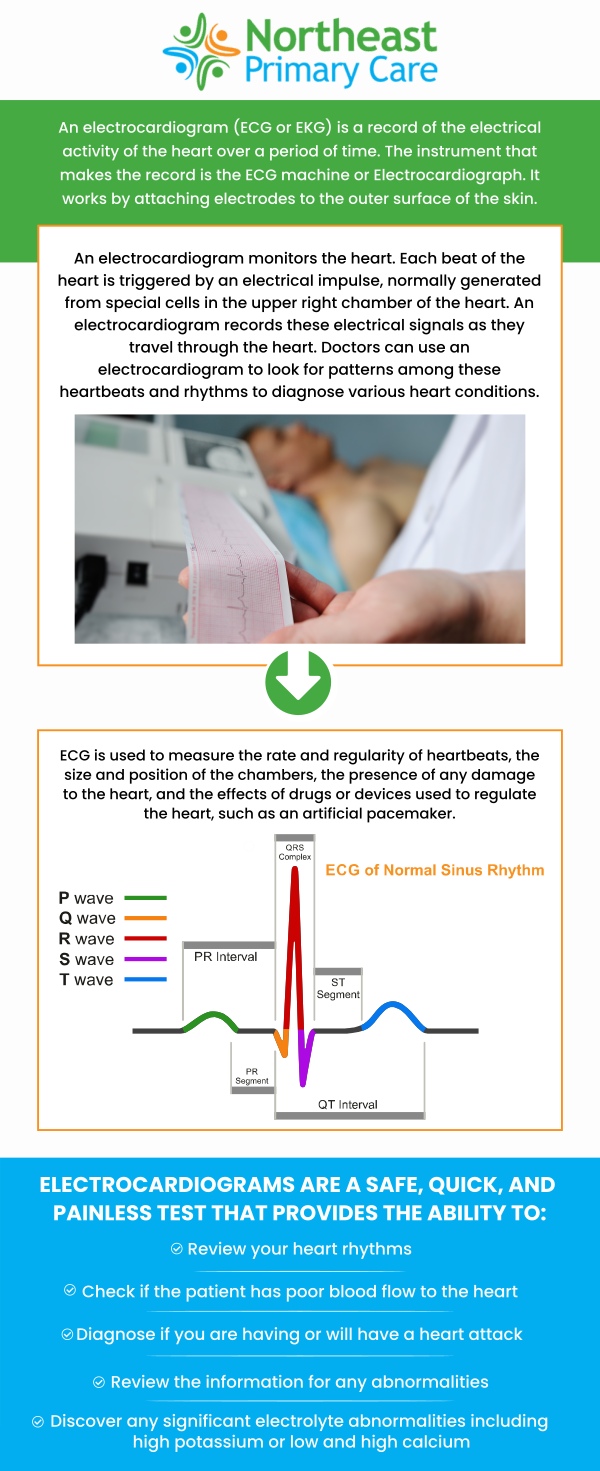
Table of Contents:
Is an EKG test painful?
Do I need to fast before an EKG?
What does an EKG show about my heart?
How does an EKG detect irregular heart rhythms?
Can an EKG detect a heart attack?
What are the normal results of an EKG?
What are abnormal EKG results, and what do they mean?
Is an EKG part of a routine physical exam?
Can an EKG detect an arrhythmia?
What should I do if my EKG results are abnormal?
Can an EKG help diagnose heart failure?
What can cause an abnormal EKG reading?
Can medications affect EKG results?
What are some common myths about EKGs?
How soon will I get my EKG results?
Can an EKG test detect blocked arteries?
Are there any side effects or complications from an EKG?
An EKG is a painless, non-invasive test that uses small electrodes placed on your chest, arms, and legs. Most patients feel only slight pressure when the electrodes are attached. At Northeast Primary Care, our skilled team ensures your comfort throughout the procedure and explains each step to help you feel at ease.
Fasting is generally not necessary for a standard EKG. You can eat and drink normally, though your doctor may advise avoiding caffeine beforehand. Northeast Primary Care provides clear instructions before your test so you can prepare properly and have an accurate reading.
An EKG records the heart’s electrical activity, showing heart rate, rhythm, and any irregularities. It can reveal arrhythmias or past heart damage. At Northeast Primary Care, our physicians interpret these results in detail to provide personalized guidance for your heart health.
Electrodes on the body detect the heart’s electrical signals. Any irregularities in timing or rhythm are captured on the EKG. Northeast Primary Care reviews your EKG results carefully and recommends follow-up or treatment if an arrhythmia is detected.
Yes, an EKG can show changes in the heart’s electrical patterns that may indicate a current or previous heart attack. At Northeast Primary Care, physicians evaluate EKGs promptly to identify potential cardiac emergencies and plan appropriate care.
Normal EKG results indicate a regular heart rhythm, appropriate rate, and no electrical abnormalities. Northeast Primary Care explains normal readings thoroughly and discusses what they mean for your overall heart health.
Abnormal results may suggest arrhythmias, heart damage, or other cardiac issues. Your doctor may recommend further tests or monitoring. At Northeast Primary Care, patients receive clear explanations and guidance on next steps to address any abnormalities.
An EKG is sometimes included in routine exams for patients with risk factors for heart disease. Northeast Primary Care evaluates each patient individually to determine if an EKG is appropriate during a wellness visit.
Yes, EKGs identify irregular heart rhythms such as atrial fibrillation or other arrhythmias. Northeast Primary Care uses EKG results to guide personalized treatment and follow-up care if irregular rhythms are detected.
If results are abnormal, your doctor may recommend further testing, monitoring, or treatment. Northeast Primary Care ensures patients understand their results and provides a clear, step-by-step plan for managing any heart concerns.
An EKG can show patterns associated with heart strain or damage, but cannot confirm heart failure alone. At Northeast Primary Care, EKGs are combined with other tests to provide a comprehensive evaluation of your heart function.
Abnormal readings may result from arrhythmias, heart disease, electrolyte imbalances, or medication effects. Northeast Primary Care considers your medical history and current medications when interpreting EKG results to ensure an accurate assessment.
Yes, some heart medications and other drugs can alter electrical patterns on an EKG. At Northeast Primary Care, physicians review your medication history to interpret results correctly and advise on any necessary adjustments.
Some people believe EKGs are painful or dangerous, which is false. They are safe, quick, and non-invasive. Northeast Primary Care educates patients on these myths to reduce anxiety and ensure confidence in heart testing.
Many EKG results are available immediately or within a few hours. Northeast Primary Care reviews your results promptly, discusses the findings with you, and provides recommendations for follow-up care if needed.
An EKG may indicate areas of reduced blood flow, but cannot directly detect blockages. Northeast Primary Care may recommend additional testing, such as stress tests or imaging, for a complete evaluation of your heart.
EKGs are very safe, with minimal risk. Some patients may experience mild skin irritation from electrodes. At Northeast Primary Care, the procedure is performed under careful supervision to ensure comfort and accuracy.
For more information, contact us or schedule an appointment. We are conveniently located at 150 Broadhollow Rd, Suite 120-A, Melville, NY 11747. We serve patients from Melville NY, Huntington NY, Farmingdale NY, Commack NY, Deer Pack NY, and Lindenhurst NY.

Check Out Our 5 Star Reviews


Additional Services You May Need

Additional Services You May Need
- Annual Physical Exam
- CDL (Commercial Driver License)
- Acute & Chronic Illness
- Covid 19
- EKG
- Healthy Aging
- Immigration Physical Exams
- Primary Care
- Preventive Care
- Diet and Nutrition
- General Care
- Management Of Diabetes
- Medical Clearance
- Pre-Employment Physicals
- Sick Visits
- STD Testing
- Women’s Health
- Drug Testing
- Internal Medicine Doctor
- Vaccines and Flu Shots
- Allergy Testing
- Spirometry


 Send Text
 How May I Help You?