

Echocardiogram vs. EKG: What’s the Difference?
Despite the fact that they sound similar, echocardiograms and EKGs serve very different purposes. While an echocardiogram uses sound waves to examine the structure of your heart, an electrocardiogram measures the pattern of electrical pulses produced by your heart rhythm. At Northeast Primary Care, Dr. Nanda Ramsaroop, MD, and our dedicated team carefully evaluate which test is right for you, drawing on over 28 years of internal medicine expertise. For more information contact us or schedule an appointment. We are conveniently located at 150 Broadhollow Rd, Suite 120-A, Melville, NY 11747.
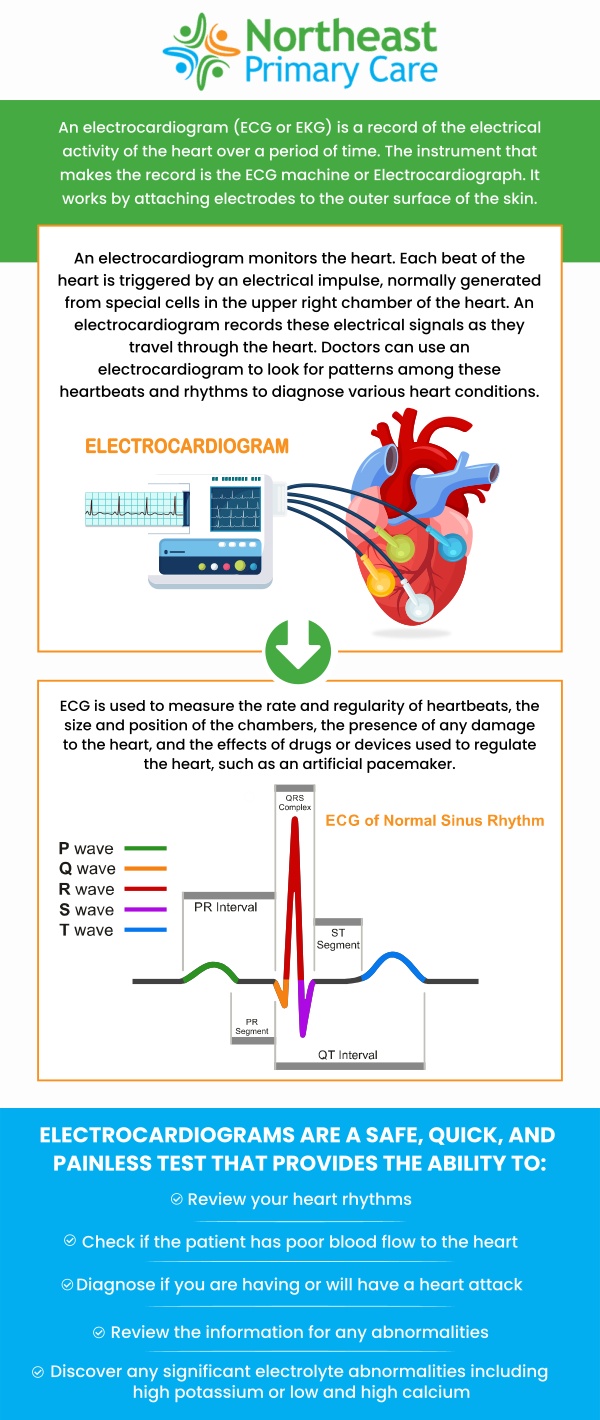
Table of Contents:
Meet Your Provider: Dr. Nanda D. Ramsaroop, MD
What is the difference between an echocardiogram and an EKG?
What does an echocardiogram show that an EKG doesn’t?
What are three heart problems that can be diagnosed with an EKG?
What does a minor heart blockage feel like?
Schedule Your Heart Health Evaluation
Meet Your Provider: Dr. Nanda D. Ramsaroop, MD

Dr. Nanda Ramsaroop brings over 28 years of internal and family medicine experience to Northeast Primary Care. After completing her residency at NYU Medical Center, she dedicated her career to whole-person, preventive care for patients 18 and older.
As an active member of the American College of Physicians and the American Medical Association, Dr. Ramsaroop believes that preventing heart disease is just as crucial as treating it. She takes pride in building one-on-one relationships, taking the time to listen closely to your symptoms so she can develop an accurate, highly personalized diagnostic plan using tools like EKGs and echocardiograms.
Both an echocardiogram and an EKG are diagnostic tests that evaluate heart function; however, they use different technology and provide different results. An echocardiogram, also known as an “echo,” is an ultrasound test that uses high-frequency sound waves to create images of the heart, its valves, and blood flow. This test provides detailed information about the heart’s function and any potential problems with the heart muscle or valves.
An EKG, also known as an electrocardiogram, is a test that measures the electrical activity of the heart to detect abnormalities in the heart rhythm, such as arrhythmias. An EKG provides information about the heart rate and rhythm but does not give a clear picture of the heart’s structure like an echo. Both tests are commonly ordered by a physician and can be done in a clinic or hospital setting.
An echocardiogram provides a visual image of the heart, including its size, shape, and movement, as well as the blood flow through the heart’s chambers and valves. This information allows doctors to assess the heart’s overall function and detect any structural abnormalities or issues with the heart muscle or valves.
While an EKG can provide information about the heart rate and rhythm, it does not give a clear picture of the heart’s structure as an echocardiogram does. In summary, an echocardiogram provides more detailed information about the heart’s structure and function, while an EKG focuses primarily on the heart’s electrical activity.
An EKG is an important diagnostic tool for evaluating the electrical activity of the heart, which can help detect a variety of heart problems. Here are three common heart conditions that can be diagnosed using an EKG:
• Atrial fibrillation: Also referred to as AFib, this is a type of arrhythmia that occurs when the heart beats irregularly and rapidly. An EKG can detect changes in the electrical signals that may indicate atrial fibrillation, which can increase the risk of stroke and heart failure.
• Myocardial infarction (heart attack): An EKG can detect changes in the electrical activity of the heart that may indicate a heart attack has occurred. A heart attack occurs when there is a blockage in the blood flow to the heart, which can cause damage to the heart muscle.
• Heart block: This is a condition in which the electrical signals that control the heart rate are delayed or blocked, leading to a slow or irregular heart rate. An EKG can detect heart block and help determine the need for a pacemaker to regulate the heart rate.
An EKG is a non-invasive, essential diagnostic tool that can provide important information to help determine the best course of treatment for patients with heart problems.
Minor heart blockages can sometimes cause symptoms that feel like chest discomfort or pressure, fatigue, shortness of breath, or even palpitations. However, in many cases, people with minor blockages may not experience any symptoms at all.
If you are experiencing symptoms of a heart blockage, it is important to seek medical attention. Your doctor will perform tests such as an electrocardiogram, echocardiogram, or coronary angiogram to determine the severity of your condition.
They may also recommend lifestyle changes, medication, or a minimally invasive procedure such as angioplasty to treat the blockage.
Early detection and treatment can dramatically improve your prognosis and quality of life. Regular exercise, a balanced diet, avoiding smoking, and managing stress levels can all help reduce the risk of developing heart disease.
Take control of your heart health with Dr. Nanda Ramsaroop and our experienced team at Northeast Primary Care. With over 28 years of dedicated clinical experience, Dr. Ramsaroop takes the time to listen to your concerns, evaluate your whole-body health, and get you clear answers through advanced diagnostic testing.
We are currently accepting new patients at our office, conveniently located at 150 Broadhollow Rd, Suite 120-A, Melville, NY 11747. We proudly serve patients from Melville, Huntington, Farmingdale, Commack, Deer Park, Lindenhurst, NY, and surrounding communities.

Check Out Our 5 Star Reviews


Additional Services You May Need

Additional Services You May Need
- Annual Physical Exam
- CDL (Commercial Driver License)
- Acute & Chronic Illness
- Covid 19
- EKG
- Healthy Aging
- Immigration Physical Exams
- Primary Care
- Preventive Care
- Diet and Nutrition
- General Care
- Management Of Diabetes
- Medical Clearance
- Pre-Employment Physicals
- Sick Visits
- STD Testing
- Women’s Health
- Drug Testing
- Internal Medicine Doctor
- Vaccines and Flu Shots
- Allergy Testing
- Spirometry


 Send Text
 How May I Help You?