

ECG vs Electrocardiograph: A Comprehensive Guide
Understanding the difference between an ECG and an electrocardiograph is essential for those seeking insight into their heart health. Dr. Nanda D Ramsaroop, MD at Northeast Primary Care, explains that while the electrocardiograph is the device used to record the heart’s electrical activity, the ECG (or EKG) refers to the actual waveform produced by this device. This detailed guide breaks down how each plays a crucial role in diagnosing and monitoring various heart conditions, such as arrhythmias and heart attacks. For more information, contact us or schedule an appointment. We are conveniently located at 137 Willis Avenue, Suite 110, Mineola, NY 11501.
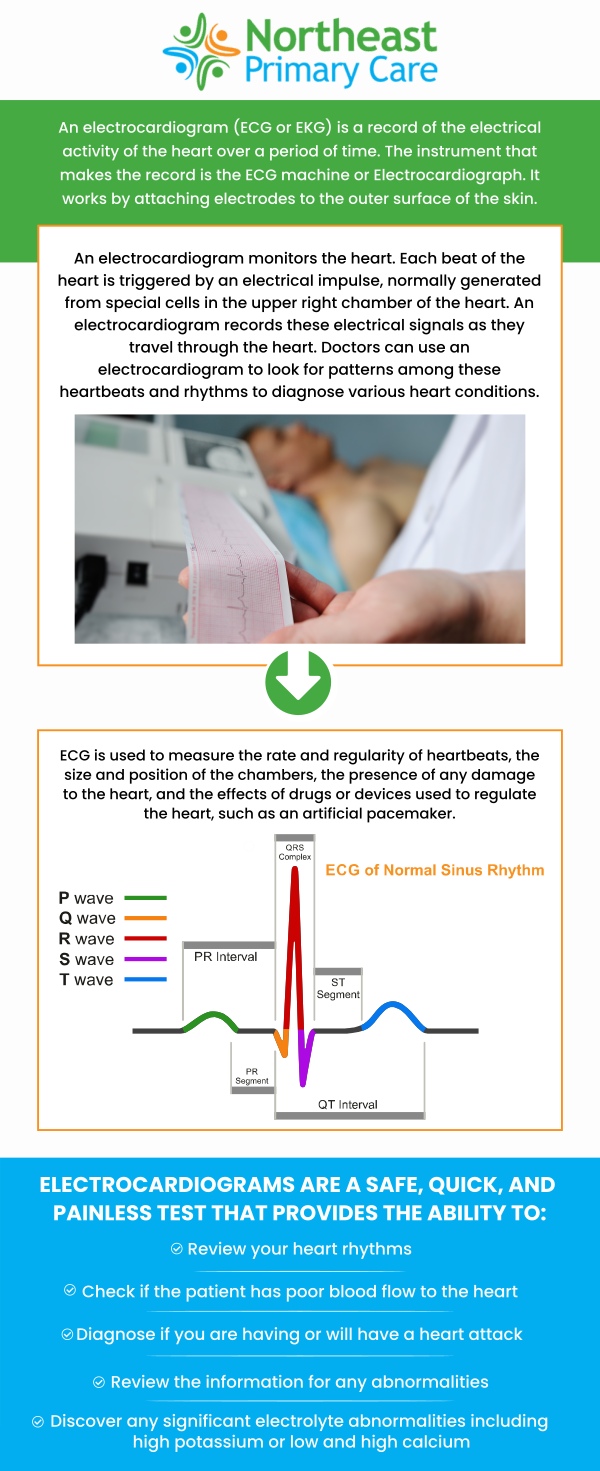
Table of Contents:
What is the difference between ECG and electrocardiograph?
How does an ECG work compared to an electrocardiograph?
When should you get an ECG or electrocardiograph in Mineola, NY?
How do you prepare for an ECG or electrocardiograph test?
How does Dr. Nanda D Ramsaroop, MD, in Mineola, NY, explain the differences in how an ECG works compared to an electrocardiograph?
At Northeast Primary Care, you may hear our healthcare team mention both “ECG” and “electrocardiograph” during your visit. While these terms are often used interchangeably, they refer to different aspects of heart health assessment.
An electrocardiograph (ECG or EKG) is a medical device used to measure and record the electrical activity of the heart. It captures the heart’s electrical impulses, which help doctors evaluate the rhythm and health of the heart. By detecting variations in electrical impulses, the ECG provides important insights into how well the heart is functioning and whether there are any irregularities like arrhythmias or signs of a heart attack.
On the other hand, ECG (or EKG, from the German “Elektrokardiogramm”) refers specifically to the recording or graphic output produced by the electrocardiograph. It represents the heart’s electrical activity over a period of time and is typically displayed as a series of waveforms. These waveforms indicate the timing of electrical impulses, showing the contraction and relaxation of the heart muscles. In summary, the electrocardiograph is the machine that records the data, and the ECG is the actual readout that shows the heart’s electrical patterns.
When you come to Northeast Primary Care, the electrocardiograph is the equipment we use, and the ECG is the result—a crucial tool in helping us ensure your heart is healthy. If you have any questions about your heart health or the tests we offer, our dedicated team is always here to help.
At Northeast Primary Care, we utilize electrocardiograms (ECG or EKG) as an essential tool in evaluating the health of your heart. An ECG is a non-invasive test that records the electrical activity of your heart, providing a clear picture of how your heart is beating and functioning. To perform this test, a device called an electrocardiograph is used. During the procedure, small electrodes are placed on your chest, arms, and legs to detect the electrical signals produced by your heart.
The electrocardiograph then records these signals and displays them as a waveform, which can be viewed on paper or a digital screen for interpretation. The information captured in an ECG helps healthcare providers assess the heart’s rhythm, rate, and overall electrical function. This valuable data aids in diagnosing and monitoring various cardiac conditions, such as arrhythmias, heart attacks, and other heart-related issues.
By offering ECG testing, healthcare providers ensure that patients receive timely and comprehensive care tailored to their cardiovascular health. If you have concerns about your heart or are experiencing symptoms such as chest pain, palpitations, or shortness of breath, our team at Northeast Primary Care is here to help with expert evaluation and advanced diagnostic testing, including ECGs.
If you are wondering when to get an ECG (electrocardiograph) at Northeast Primary Care, it’s important to understand the symptoms and situations that typically prompt this test. An ECG is a simple, painless procedure that records the electrical activity of your heart—providing our medical team with crucial information about your heart health. Here are some situations when you may need to get an ECG or electrocardiograph in Mineola, NY:
• Experiencing Chest Pain or Discomfort: If you have chest pain, pressure, or tightness, an ECG can help identify potential heart problems, including a heart attack.
• Irregular Heartbeats (Arrhythmias): If you experience palpitations, a fluttering sensation, or irregular heartbeats, an ECG can help diagnose arrhythmias.
• Shortness of Breath: Difficulty breathing, especially with exertion, may require an ECG to assess heart function and rule out heart-related causes.
• Dizziness or Fainting: If you have unexplained dizziness or fainting episodes, an ECG can help identify issues with your heart’s electrical system.
• High Blood Pressure or Heart Disease History: If you have high blood pressure, a family history of heart disease, or other risk factors, regular ECGs may be recommended to monitor heart health.
• Pre-surgical or Pre-Employment Screening: An ECG may be required as part of a routine medical examination before surgery or starting a new job, particularly if the position involves physical exertion.
• Follow-up for Heart Conditions: If you’ve been diagnosed with a heart condition, your healthcare provider may recommend regular ECGs to monitor changes in your heart’s activity.
At Northeast Primary Care, our team will determine if an ECG is necessary based on your medical history and current symptoms. Early detection of heart issues through tests like an ECG can be vital for effective treatment and prevention of more serious complications.
At Northeast Primary Care, we want your experience with an electrocardiograph (ECG) test to be smooth and stress-free. Preparing for an ECG is simple and does not require extensive preparation. Here’s how to prepare for an ECG or electrocardiograph test:
• Wear Comfortable Clothing: Choose clothing that allows easy access to your chest, arms, and legs. You may need to remove some clothing for electrode placement.
• Avoid Lotions or Ointments: Refrain from applying lotions, oils, or creams on your skin before the test, as they can interfere with electrode adhesion.
• Relax Before the Test: It’s important to be as calm and relaxed as possible, as stress or physical activity can affect the results.
• Avoid Stimulants: If possible, avoid caffeine or other stimulants for a few hours before the test, as they can affect your heart rate.
• Inform Your Healthcare Provider: Let the technician or provider know if you have any heart conditions, allergies, or are pregnant. Also, inform them if you have any pacemakers or other implants.
• Stay Still During the Test: Be prepared to lie still and breathe normally during the test, as movement can interfere with the recording.
• No Special Fasting Required: Unlike some other medical tests, you don’t need to fast or make significant changes to your diet before an ECG.
At Northeast Primary Care, we are committed to providing you with the highest quality of care and ensuring that your ECG or electrocardiograph test is performed accurately and efficiently. Our skilled team is here to guide you through the process and answer any questions you may have, ensuring a comfortable and stress-free experience.
Dr. Nanda D. Ramsaroop, MD, a board-certified internal and family medicine specialist with over 28 years of experience, explains that the electrocardiograph is the medical device used to measure and record the heart’s electrical activity. As a clinician, Dr. Ramsaroop places small electrodes on the patient’s chest, arms, and legs, which detect the electrical impulses generated by the heart. These signals are then captured by the electrocardiograph, which produces a record on paper or a digital screen. This allows Dr. Ramsaroop to closely monitor the heart’s function, identify abnormalities, and detect conditions such as arrhythmias or signs of a heart attack.
Dr. Ramsaroop further clarifies that the ECG (or EKG) refers specifically to the actual recording or graphical output of the heart’s electrical signals, produced by the electrocardiograph. This output appears as a waveform, which is essential for assessing the heart’s rhythm, rate, and overall electrical function. As a physician, Dr. Ramsaroop interprets these waveforms to diagnose a wide range of heart conditions, ensuring that the treatment plan is tailored to the individual’s cardiovascular health needs. While the electrocardiograph is the tool that captures the data, the ECG is the diagnostic result that guides clinical decisions.
For more information, contact us or schedule an appointment. We are conveniently located at 137 Willis Avenue, Suite 110, Mineola, NY 11501. We serve patients from Mineola NY, Floral Park NY, Uniondale NY, East Meadow NY, and surrounding areas!

Check Out Our 5 Star Reviews


Additional Services You May Need

Additional Services You May Need
- Annual Physical Exam
- CDL (Commercial Driver License)
- Acute & Chronic Illness
- Covid 19
- EKG
- Healthy Aging
- Immigration Physical Exams
- Primary Care
- Preventive Care
- Diet and Nutrition
- General Care
- Management Of Diabetes
- Medical Clearance
- Pre-Employment Physicals
- Sick Visits
- STD Testing
- Women’s Health
- Drug Testing
- Internal Medicine Doctor
- Vaccines and Flu Shots
- Allergy Testing
- Spirometry


 Send Text
 How May I Help You?