

When Should You Get an EKG for Heart Palpitations or an Irregular Heartbeat?
Symptoms such as a racing heartbeat, fluttering sensations in the chest, skipped heartbeats, dizziness, or unexplained changes in heart rhythm may indicate the need for an electrocardiogram (EKG). At Northeast Primary Care, our professional team helps patients understand these warning signs and determine when cardiac testing is appropriate. Our team evaluates each patient’s symptoms, medical history, and cardiovascular risk factors to recommend appropriate diagnostic testing and follow-up care. For more information, contact us or schedule an appointment online. We are conveniently located at 137 Willis Avenue, Suite 110, Mineola, NY 11501.
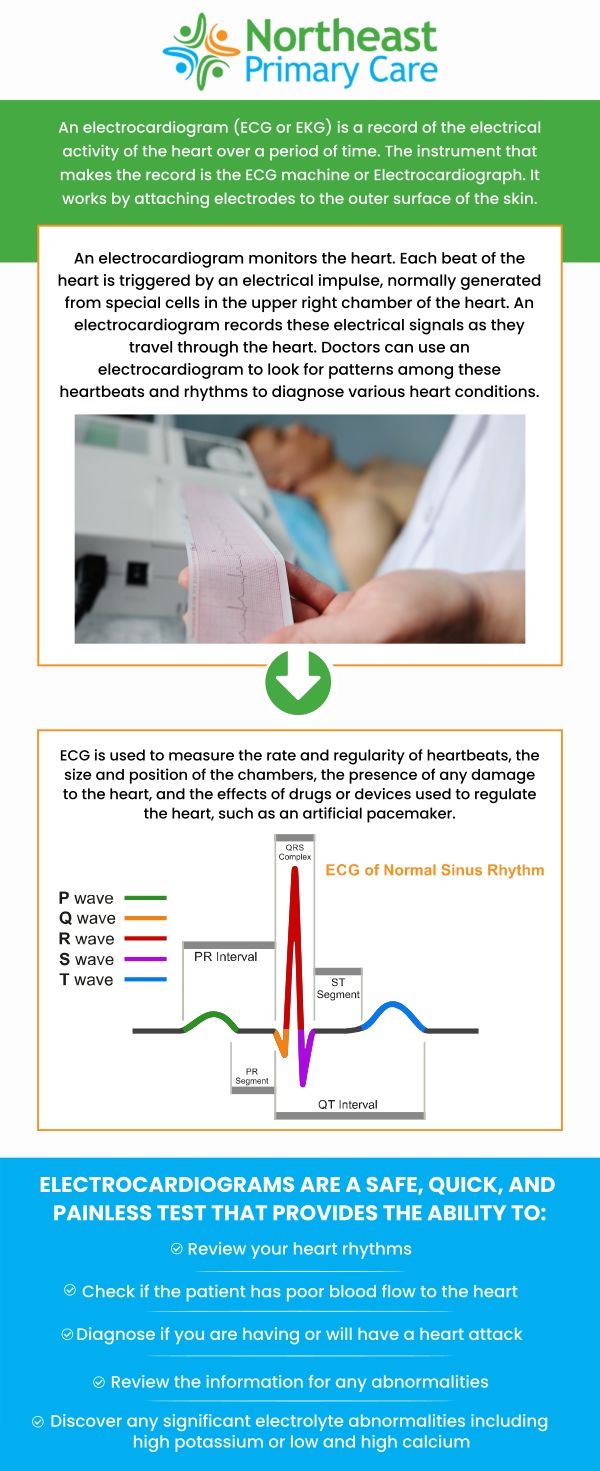
Table of Contents:
What are heart palpitations, and when should they be evaluated?
How can an EKG help detect an irregular heartbeat?
What heart rhythm problems can an EKG identify?
Can an EKG detect heart palpitations that come and go?
What happens during an EKG test for heart palpitations?
When might additional heart monitoring be necessary?
Is an EKG necessary if heart palpitations occur without other symptoms?
Can stress or anxiety cause changes in EKG results?
How accurate is an EKG for detecting heart rhythm abnormalities?
Can an EKG show signs of a previous heart attack?
What happens if an EKG shows an abnormal heart rhythm?
Your Heartbeat Tells a Story: Understand When EKG Testing Is Important with Our Team at Northeast Primary Care in Mineola, NY
Heart palpitations are sensations that make your heartbeat feel unusually fast, strong, irregular, or as though it is skipping beats. These sensations may occur while resting, exercising, or experiencing emotional stress. Although occasional palpitations are often harmless, frequent or unexplained episodes may indicate an underlying heart rhythm abnormality that requires medical attention.
Heart palpitations can develop due to stress, anxiety, dehydration, caffeine consumption, hormonal changes, or underlying cardiovascular conditions. Medical evaluation is particularly important when palpitations:
• Occur frequently or become progressively worse.
• Last longer than usual or develop without an identifiable trigger.
• Are accompanied by recurring dizziness, fatigue, or shortness of breath.
• Occur in individuals with existing heart disease or a family history of serious heart rhythm disorders.
At Northeast Primary Care, our dedicated team helps patients understand the possible causes of heart palpitations through personalized evaluations and cardiovascular risk assessments. Our team may recommend an electrocardiogram (EKG) or additional heart monitoring to investigate recurring symptoms and determine appropriate next steps. Palpitations accompanied by chest pain, fainting, or severe breathing difficulty require emergency medical attention.
An electrocardiogram (EKG) is a painless, noninvasive test that measures the electrical activity of the heart to assess its rhythm and function. It helps healthcare providers identify unusually fast, slow, or irregular heartbeats and detect abnormalities in the heart’s electrical conduction system that may suggest an underlying cardiac condition.
During an EKG, small electrodes attached to the chest, arms, and legs record the heart’s electrical activity. The resulting tracing displays important information about heart rate, rhythm, and electrical conduction patterns. Healthcare providers examine these recordings for abnormalities, including atrial fibrillation, premature heartbeats, and certain electrical conduction disorders. However, a standard EKG only captures heart activity during the brief testing period.
At Northeast Primary Care, our team helps patients understand how EKG testing contributes to evaluating heart palpitations and irregular heartbeats. By reviewing symptoms, medical history, and available diagnostic findings, our team can determine whether further cardiac testing or specialist evaluation is appropriate. Our goal is to support timely identification of potential heart rhythm concerns and individualized cardiovascular care.
An EKG can detect several types of heart rhythm abnormalities, also known as arrhythmias, by measuring the electrical activity that controls each heartbeat. These abnormalities may cause the heart to beat unusually fast, too slowly, or in an irregular pattern. Some arrhythmias produce noticeable symptoms, while others may be discovered during routine medical evaluations.
Common heart rhythm abnormalities that an EKG may identify include:
• Atrial Fibrillation: An irregular heart rhythm that can increase the risk of stroke and other cardiovascular complications.
• Tachycardia: A heart rate that is faster than normal, which may originate from different areas of the heart.
• Bradycardia: An unusually slow heart rate that may require evaluation when associated with symptoms.
• Premature Heartbeats: Extra heartbeats that may create sensations of fluttering or skipped beats.
• Heart Block: An electrical conduction abnormality that can interfere with the normal transmission of signals through the heart.
At Northeast Primary Care, our dedicated team focuses on identifying potential cardiac concerns by reviewing each patient’s symptoms, cardiovascular risk factors, and diagnostic findings. When an EKG suggests a rhythm abnormality, our team can help determine whether additional monitoring, further evaluation, or cardiology care is needed. This personalized approach supports informed decisions about heart health.
An EKG can identify heart rhythm abnormalities associated with palpitations, but its effectiveness depends on whether the abnormal rhythm occurs during testing. A standard resting EKG typically records the heart’s electrical activity for only a few seconds. If palpitations occur intermittently, the heart rhythm may appear normal during the examination even when an underlying rhythm disturbance is present.
For patients experiencing occasional or unpredictable palpitations, additional heart rhythm monitoring may be recommended. These monitoring options can include:
• Holter Monitor: Continuously records heart activity, commonly for 24–48 hours or longer.
• Patch Monitor: Records heart rhythms over several days or weeks, depending on the device.
• Event Monitor: Captures heart rhythm information during symptoms or automatically when certain abnormalities occur.
At Northeast Primary Care, our team considers the frequency, duration, and severity of each patient’s palpitations when discussing appropriate diagnostic options. If a standard EKG does not identify the cause, our team can recommend further evaluation or coordinate additional monitoring when medically indicated. Understanding symptom patterns helps guide more accurate cardiovascular assessments and appropriate follow-up care.
An electrocardiogram (EKG) is a quick, painless, and noninvasive procedure used to evaluate the heart’s electrical activity. A healthcare professional places adhesive electrodes on the chest, arms, and legs. These electrodes connect to an EKG machine that records electrical signals as the heart beats. The test does not deliver electricity into the body.
Patients are generally asked to lie still and breathe normally while the recording is completed. The electrical activity is displayed as a series of waves that healthcare providers examine to assess heart rhythm and identify possible abnormalities. The recording itself usually takes only a few seconds, while the entire procedure, including preparation, commonly takes several minutes.
At Northeast Primary Care, our team helps patients understand what to expect from EKG testing and how the findings may contribute to evaluating heart palpitations. Our team reviews relevant symptoms, medical history, and available test results to determine whether additional cardiovascular assessments are necessary. This individualized approach helps patients better understand their heart health and appropriate next steps.
Additional heart monitoring may be necessary when palpitations occur intermittently, symptoms continue despite a normal resting EKG, or an initial examination does not identify the cause of an irregular heartbeat. Because a standard EKG captures only a brief period of heart activity, temporary rhythm abnormalities may remain undetected. Extended monitoring provides more information about how the heart behaves during normal daily activities.
Healthcare providers may recommend additional monitoring when patients experience:
• Recurring Palpitations: Episodes that occur unpredictably or cannot be captured during a standard EKG.
• Unexplained Dizziness: Repeated lightheadedness that may be associated with changes in heart rhythm.
• Suspected Arrhythmias: Symptoms or previous findings suggesting an intermittent electrical abnormality.
• Fainting Episodes: Unexplained loss of consciousness that may require prompt cardiovascular evaluation.
• Persistent Symptoms: Ongoing irregular heartbeat sensations despite inconclusive initial testing.
At Northeast Primary Care, we evaluate each patient’s symptoms, medical history, and cardiovascular risk factors to help determine when extended heart monitoring may be appropriate. Our team can recommend further diagnostic assessments, review available findings, and coordinate specialist care when necessary. Through personalized evaluations and ongoing preventive care, we help patients make informed decisions about their cardiovascular health.
Is an EKG necessary if heart palpitations occur without other symptoms?
An EKG may be recommended if heart palpitations occur frequently, last longer than usual, or have no clear cause, even without additional symptoms. A healthcare provider can evaluate heart rhythm patterns and individual cardiovascular risk factors to determine whether testing is appropriate.
Stress and anxiety can increase heart rate and cause temporary changes in heart rhythm that may appear on an EKG. However, an abnormal EKG should not automatically be attributed to anxiety without proper medical evaluation.
An EKG can accurately identify many heart rhythm abnormalities occurring during the test, including atrial fibrillation. However, intermittent irregular heartbeats may require additional testing, such as continuous or ambulatory heart monitoring.
An EKG may reveal electrical patterns suggesting a previous heart attack, even when symptoms were not recognized. However, these findings are not always definitive, and additional cardiac testing may be necessary for confirmation.
If an EKG detects an abnormal heart rhythm, a healthcare provider evaluates the findings alongside the patient’s symptoms and medical history. Depending on the results, additional monitoring, diagnostic testing, or a referral to a cardiologist may be recommended.
Symptoms such as a racing heartbeat, fluttering sensations in the chest, skipped heartbeats, dizziness, or unexplained fatigue may indicate changes in heart rhythm that require medical evaluation. At Northeast Primary Care in Mineola, NY, our dedicated team helps patients recognize these warning signs and understand when an electrocardiogram (EKG) may be necessary. An EKG records the heart’s electrical activity and helps identify abnormal rhythms, including atrial fibrillation and other arrhythmias. Our team carefully evaluates each patient’s symptoms, medical history, and cardiovascular risk factors to determine whether EKG testing or additional heart monitoring is appropriate.
Our team takes a personalized approach to evaluating heart palpitations and irregular heartbeats through comprehensive health assessments, diagnostic guidance, and preventive care recommendations. We help patients understand their EKG results, identify potential factors contributing to irregular heart rhythms, and determine appropriate next steps for managing cardiovascular concerns. Through individualized evaluations, ongoing monitoring, and patient education, our team at Northeast Primary Care supports early identification of heart rhythm abnormalities and promotes long-term heart health.
For more information, contact us or schedule an appointment online. We are conveniently located at 137 Willis Avenue, Suite 110, Mineola, NY 11501. We serve patients from Mineola NY, Floral Park NY, Uniondale NY, East Meadow NY, Jericho NY, and surrounding areas.

Check Out Our 5 Star Reviews


Additional Services You May Need

Additional Services You May Need
- Annual Physical Exam
- CDL (Commercial Driver License)
- Acute & Chronic Illness
- Covid 19
- EKG
- Healthy Aging
- Immigration Physical Exams
- Primary Care
- Preventive Care
- Diet and Nutrition
- General Care
- Management Of Diabetes
- Medical Clearance
- Pre-Employment Physicals
- Sick Visits
- STD Testing
- Women’s Health
- Drug Testing
- Internal Medicine Doctor
- Vaccines and Flu Shots
- Allergy Testing
- Spirometry


 Send Text
 How May I Help You?