

Why Does the Nose Run During a Cold, and What Helps Relieve It?
At Northeast Primary Care, our professional medical team helps patients understand why a runny nose occurs during a cold and how to manage uncomfortable symptoms. When a cold virus infects the nasal passages, the immune system responds by increasing mucus production and causing inflammation in the nasal lining. Our team provides personalized evaluations, supportive care recommendations, and guidance to manage persistent cold symptoms and promote comfortable recovery. For more information, contact us or schedule an appointment online. We are conveniently located at 137 Willis Avenue, Suite 110, Mineola, NY 11501.
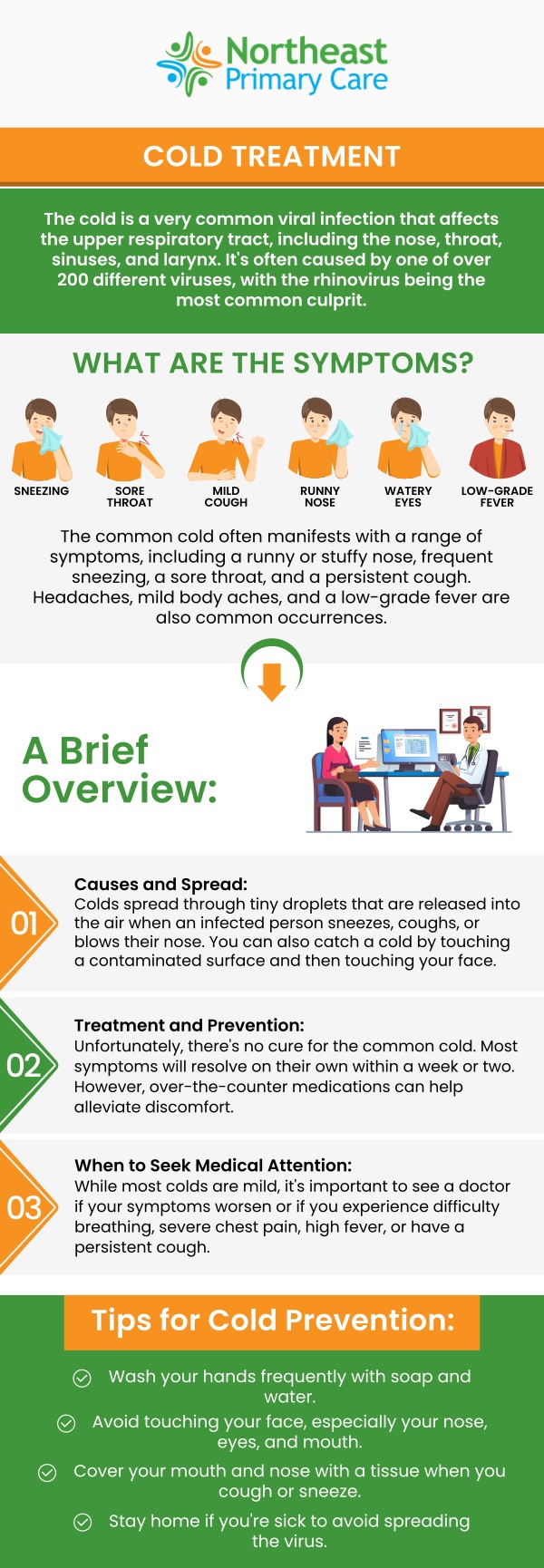
Table of Contents:
What causes a runny nose during a common cold?
Why does the body produce excess mucus when fighting a cold?
How long does a runny nose typically last during a cold?
What are the most effective ways to relieve a runny nose caused by a cold?
Why does a runny nose get worse at night during a cold?
How can a runny nose from a cold be distinguished from allergies?
Can a cold cause a runny nose without nasal congestion?
When should a persistent runny nose from a cold be evaluated by a doctor?
Why Colds Keep the Nose Running: Uncover the Causes and Find Lasting Relief with Our Team at Northeast Primary Care in Mineola, NY
A runny nose develops during a common cold when the immune system responds to a viral infection in the upper respiratory tract. At Northeast Primary Care, our team helps patients understand the causes of nasal symptoms and provides personalized guidance for managing cold-related discomfort.
• Viral Infection: Common cold viruses infect the lining of the nose and throat, triggering the body’s immune response and increasing nasal secretions.
• Increased Mucus Production: The nasal glands produce additional mucus to trap viruses, irritants, and other particles, helping protect the respiratory system.
• Inflammation of Nasal Passages: The immune system releases inflammatory substances that irritate the nasal lining, contributing to excessive nasal discharge and congestion.
• Increased Fluid Leakage: During an infection, blood vessels in the nasal lining become more permeable, allowing additional fluid to enter the nasal passages and cause watery drainage.
• Swelling of Nasal Tissues: Inflammation causes the nasal lining to swell, affecting normal mucus drainage and contributing to congestion and a runny nose.
• Natural Immune Defense: Increased mucus helps capture infectious particles, while tiny hair-like structures called cilia move mucus toward the throat for clearance.
At Northeast Primary Care, our dedicated team provides individualized evaluations and supportive care recommendations to help patients manage runny noses, nasal congestion, and other cold symptoms while supporting a comfortable recovery.
During a common cold, the body produces excess mucus as part of its natural immune response to a viral infection. When cold viruses enter the nasal passages and throat, the immune system triggers inflammation, stimulating mucus-producing glands to increase secretion. This additional mucus helps trap viruses, irritants, and other particles, preventing them from spreading further into the respiratory tract. Inflammation also causes swelling and increased fluid release in the nasal lining, contributing to a runny nose, congestion, and postnasal drip.
Excess mucus plays an important role in protecting the respiratory system during an infection. It contains antibodies and other immune substances that help the body defend itself against viruses. As a cold progresses, mucus may become thicker or change from clear to white, yellow, or green due to immune activity. These changes do not necessarily indicate a bacterial infection. Staying hydrated, using saline nasal sprays, getting adequate rest, and maintaining comfortable indoor humidity can help loosen mucus and relieve nasal discomfort.
At Northeast Primary Care, our dedicated team helps patients understand cold symptoms and provides personalized recommendations for managing excessive mucus production, nasal congestion, and persistent drainage. Although most colds improve within 7 to 10 days, symptoms that worsen after initial improvement or persist beyond 10 days without improvement may require medical evaluation. Our team focuses on supportive care, symptom management, and guidance to promote a comfortable recovery.
At Northeast Primary Care, we help patients manage common cold symptoms and recognize when they may need medical attention. A runny nose from a common cold typically lasts 7 to 10 days, though mild drainage or congestion can linger for up to two weeks. Symptoms are usually strongest during the first few days and then gradually improve. Nasal mucus may start clear and become thicker, white, yellow, or green as the cold progresses. A change in mucus color alone does not mean you have a bacterial infection or need antibiotics.
To ease symptoms at home, try saline nasal spray, drink fluids, and use a clean humidifier. If you use a nasal rinse, choose distilled, sterile, or previously boiled and cooled water. Contact Northeast Primary Care if your symptoms last more than 10 days without improvement, improve and then worsen, or come with a persistent fever or significant facial pain.
Seek urgent medical care if you have trouble breathing. If your runny nose continues for several weeks—especially with itchy eyes and frequent sneezing—allergies may be the cause. Northeast Primary Care can help evaluate your symptoms and recommend appropriate next steps.
Managing a runny nose during a cold involves soothing irritated nasal passages, reducing excess mucus, and supporting the body’s natural healing process. At Northeast Primary Care, our team recommends several practical strategies to help patients relieve discomfort and recover comfortably.
• Use Saline Nasal Sprays: Saline sprays help moisturize nasal passages, loosen mucus, and reduce irritation associated with a runny nose.
• Stay Properly Hydrated: Drinking plenty of water, warm herbal teas, and clear fluids can help thin nasal mucus and make drainage easier.
• Get Adequate Rest: Sufficient sleep and rest support immune function and help the body recover from a viral infection.
• Use a Clean Humidifier: Adding moisture to indoor air can soothe dry nasal passages and reduce irritation caused by congestion.
• Gently Blow Your Nose: Clearing nasal mucus with soft tissues can provide temporary relief while preventing unnecessary irritation.
• Elevate Your Head While Sleeping: Keeping your head slightly raised may improve nighttime comfort and reduce postnasal drainage.
At Northeast Primary Care, our dedicated team provides personalized guidance to help patients manage cold symptoms effectively. If a runny nose persists for more than 10 days without improvement or worsens after initially improving, our team can evaluate symptoms and recommend appropriate care.
Why does a runny nose get worse at night during a cold?
A runny nose may worsen at night because lying down can increase the sensation of nasal congestion and allow mucus to collect in the throat. Dry indoor air and nasal inflammation can also intensify symptoms, making sleep uncomfortable.
A cold-related runny nose is often accompanied by a sore throat, cough, or fatigue and usually improves within 7–10 days. Allergies commonly cause sneezing, itchy eyes, and clear nasal discharge without fever and may persist with allergen exposure.
A cold can cause a runny nose without significant nasal congestion, particularly during the early stages of infection. Increased mucus production may occur before noticeable swelling or blockage develops in the nasal passages.
A runny nose that lasts longer than 10 days without improvement, worsens after initially improving, or is accompanied by persistent fever or significant facial pain should be medically evaluated.
At Northeast Primary Care, our dedicated team helps patients understand why a runny nose develops during a cold and how to manage persistent nasal symptoms. When cold viruses infect the upper respiratory tract, the immune system responds by increasing mucus production and triggering inflammation in the nasal passages. This natural response helps trap and clear infectious particles but can also cause excessive nasal discharge, sneezing, congestion, and throat irritation. Our team evaluates each patient’s symptoms to identify potential causes and recommend appropriate care for improved comfort and recovery.
Our team takes a personalized approach to managing cold-related nasal symptoms by considering each patient’s medical history, symptom severity, and overall health. We provide guidance on supportive measures such as adequate hydration, proper rest, saline nasal sprays, and maintaining comfortable indoor humidity to help ease nasal irritation and congestion. Through individualized evaluations, practical symptom management strategies, and ongoing primary care support, our team at Northeast Primary Care helps patients manage discomfort and supports a healthier recovery.
For more information, contact us or schedule an appointment online. We are conveniently located at 137 Willis Avenue, Suite 110, Mineola, NY 11501. We serve patients from Mineola NY, Floral Park NY, Uniondale NY, East Meadow NY, Jericho NY, and surrounding areas.

Check Out Our 5 Star Reviews


Additional Services You May Need

Additional Services You May Need
- Annual Physical Exam
- CDL (Commercial Driver License)
- Acute & Chronic Illness
- Covid 19
- EKG
- Healthy Aging
- Immigration Physical Exams
- Primary Care
- Preventive Care
- Diet and Nutrition
- General Care
- Management Of Diabetes
- Medical Clearance
- Pre-Employment Physicals
- Sick Visits
- STD Testing
- Women’s Health
- Drug Testing
- Internal Medicine Doctor
- Vaccines and Flu Shots
- Allergy Testing
- Spirometry


 Send Text
 How May I Help You?